Over the past decade, playgrounds have evolved into spaces that deliver more – more ways to move, more reasons to stay, and more value for the communities they serve. What’s next?
Across New Zealand and Australia, playgrounds have grown from “nice to have” park features into core social infrastructure that’s become a hallmark of healthier, more liveable cities and towns.
Smart playground design has transformed what a single site can do – for councils and developers, and for the people who use their spaces every day. Thoughtful layouts and layered play experiences now mean one playspace can cater for toddlers and teens, parents and caregivers, social catchups and serious workouts.
Now, the playground design and equipment innovations that created these “playspaces that do more” are spilling out of parks and into streets, town centres and mixed-use precincts. Making play – and all its movement, wellbeing and social benefits – an even more accessible part of everyday life.
In this article, we explore three major trends shaping the places and ways people play in 2026 – and the design essentials that make these trends work in real life.
1. Integrated movement spaces (not “just playgrounds”)
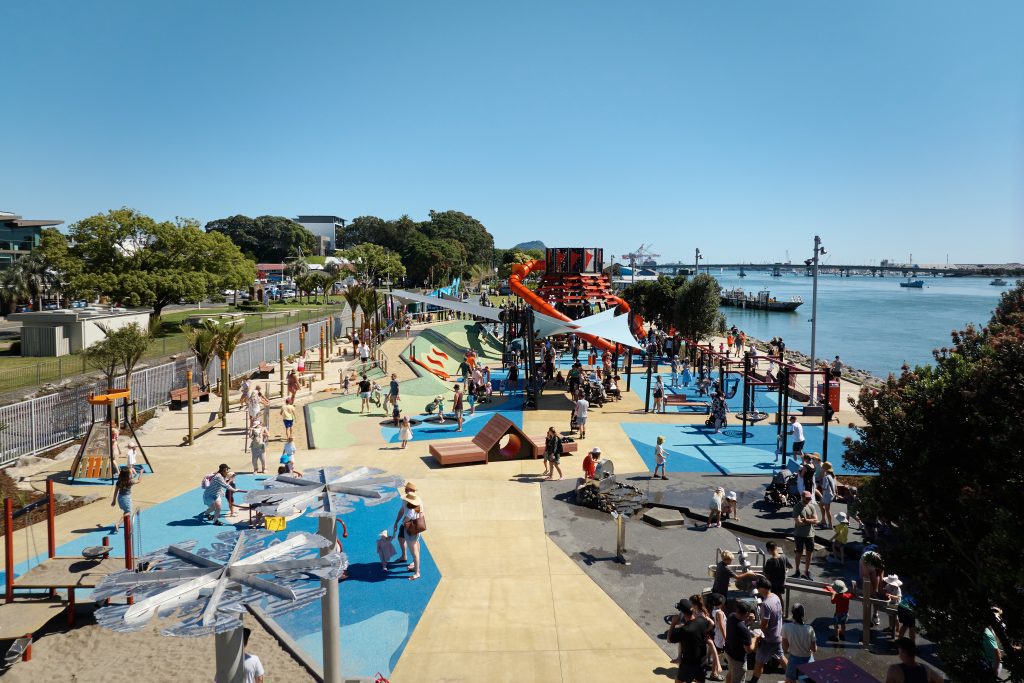
The demand for “playspaces that do more” is tightly linked to the rise of integrated movement spaces – multi-age, multi-use developments that bring play, fitness, recreation and social spaces together within a single, connected environment.
Designed to cater for different play types and needs and support a steady flow of users across weekdays and weekends, they operate at local and district level – optimising land use, achieving high visitation rates, and delivering visible community benefit for every dollar invested.
In practice, integrated movement spaces often feature playspaces that:
- Combine adventure-filled play experiences with fitness elements, such as obstacle trails, parkour-style structures, and outdoor gyms.
- Incorporate seating, shade and social pockets threaded throughout for people to rest and connect.
- Include a layout and equipment mix that feels welcoming to different ages at once, encouraging intergenerational use.
- Naturally flex with daily rhythms – early morning exercise, after-school surges, and weekend peaks.
At Playground Centre, a ‘stay and play’ philosophy and user-centred approach guides how we design and build play and recreation spaces. This means active and passive play zones as well as social zones all work together as one experience and integrate easily with play-adjacent facilities and amenities from skate parks, pump tracks and ball courts to sporting fields and community event spaces.
2. Play often, play anywhere: Kid-friendly cities and playful public places
Play is increasingly recognised as a core ingredient of liveable cities and regions – particularly as demographic shifts place greater focus on the needs of children and families. In New Zealand, for example, children make up 25% of the urban population, reinforcing the importance of urban planning and design that supports healthy development, everyday movement and social connection from an early age.
What’s more, when cities are designed to work well for children, they tend to work better for everyone. This is being recognised at a global and local level through initiatives such as Sport NZ’s Reshaping Streets and Play Streets that show benefits ranging from increased activity to an improved sense of safety and belonging.
Designing for kid-friendly cities and playful public spaces means:
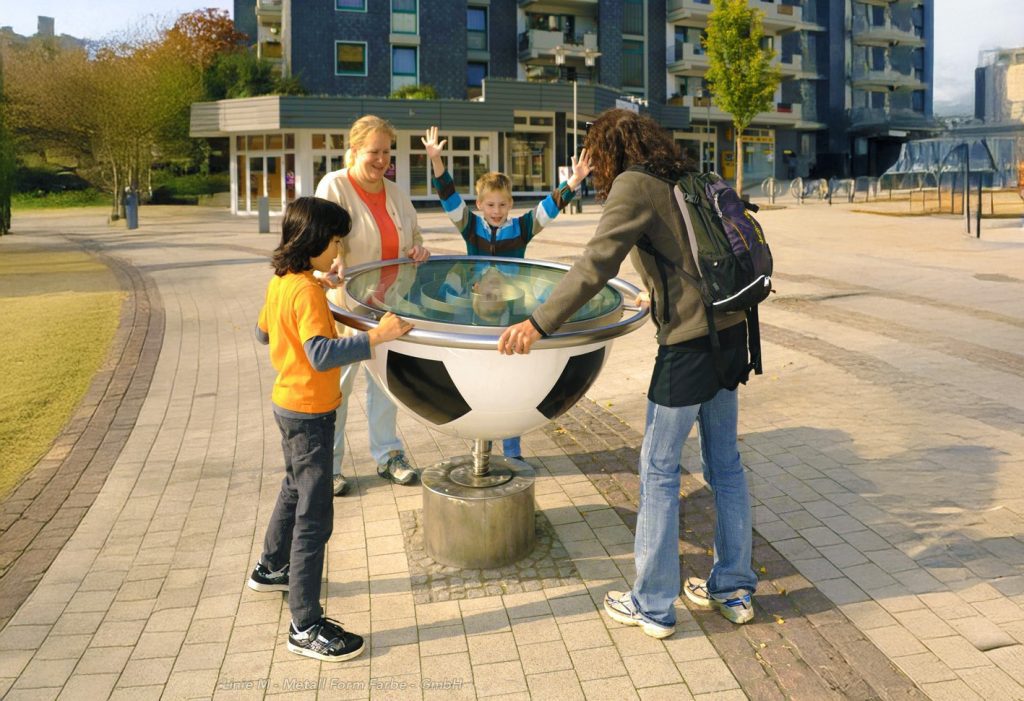
- Weaving play opportunities into streetscapes and shared spaces, from stepping stones and stand-alone play pieces to micro-play pockets.
- Playful elements that invite spontaneous exploration, movement and interaction across age groups and between children and caregivers.
- Treating play as part of the everyday journey, with informal “on-the-way” play moments as children walk or wheel to school, sport or the shops.
Importantly, this “play often, play anywhere” thinking complements, rather than replaces, playgrounds in neighbourhood parks and destination playgrounds in a city’s play network. Instead, it allows councils and developers to extend the opportunities for play without needing a full playground footprint every time.
The latest compact, modular and vertical play structures, nature play equipment, innovative street furniture like Playground Centre and Urban Effects FUNiture range, and standalone play pieces, like the Linie-M range, are ideal solutions – for everything from pocket parks, to playful updates to streetscapes and walking paths, and retail and hospitality precincts.
3. Youth zones: spaces designed with teens in mind
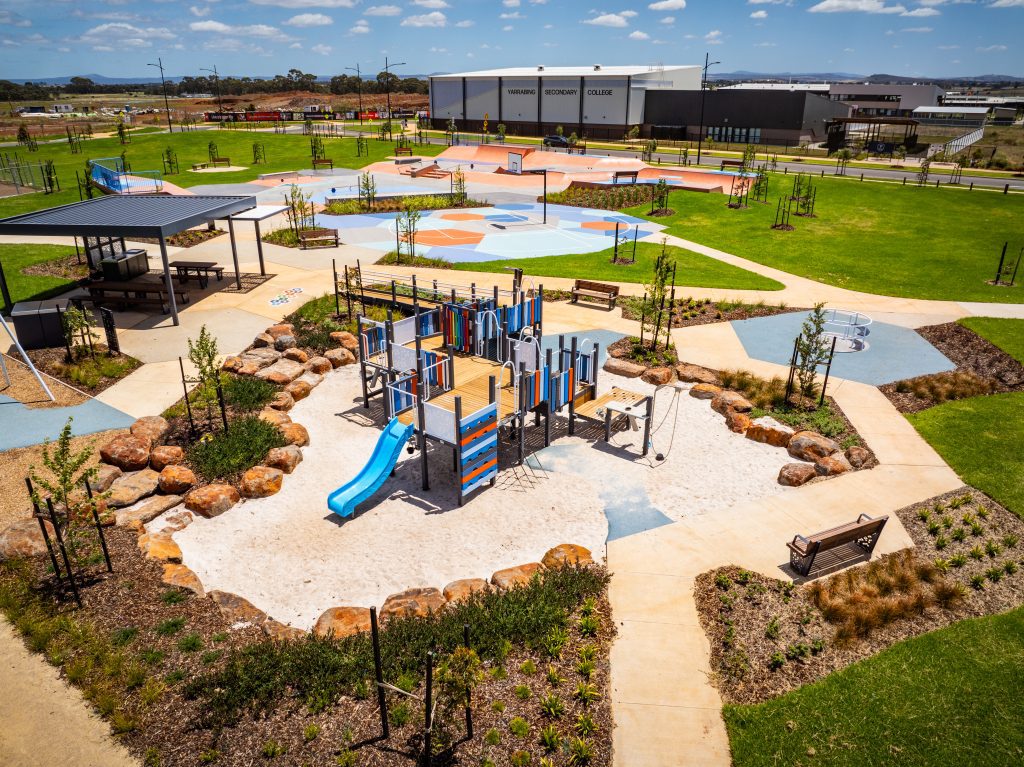
Youth zones have stepped into the spotlight, with the “teen gap” now one of the biggest challenges in council play strategies.
Regular physical activity supports mental health, resilience and social connection for adolescents and young adults, yet many young people are not active enough. Outdoor environments that offer real challenge, independence and social space can help change that pattern, especially when they sit close to schools, transport and within neighbourhoods.
Well-designed youth zones:
- Feel intentional and age-appropriate, sending a clear signal that teens’ needs are understood and valued.
- Offer challenge and progression, such as parkour and ninja-style courses and fitness trails that stay interesting over time.
- Support social time as well as movement, with hangout spots, seating clusters and good sightlines for safety.
Playground Centre designs youth-focused play, action and fitness solutions that can plug into existing parks and playspaces or anchor new youth hubs, giving councils and schools a practical way to better serve young people.
The playground design essentials that make these trends work
To bring integrated movements spaces, kid-friendly cities and youth zones to life, three design essentials keep coming up again and again: inclusive play, nature- and climate responsive design, and authentic placemaking. Once considered trends themselves – they’re now the foundations that turn good ideas into high-performing spaces people use more and enjoy more.
Design essential 1: Inclusive play
If movement spaces, neighbourhoods and streetscapes and youth zones aren’t inclusive, they’ll never reach their full potential. Inclusion is about designing the whole space so more people can confidently turn up, stay and join in.
In inclusive playground design, this means:
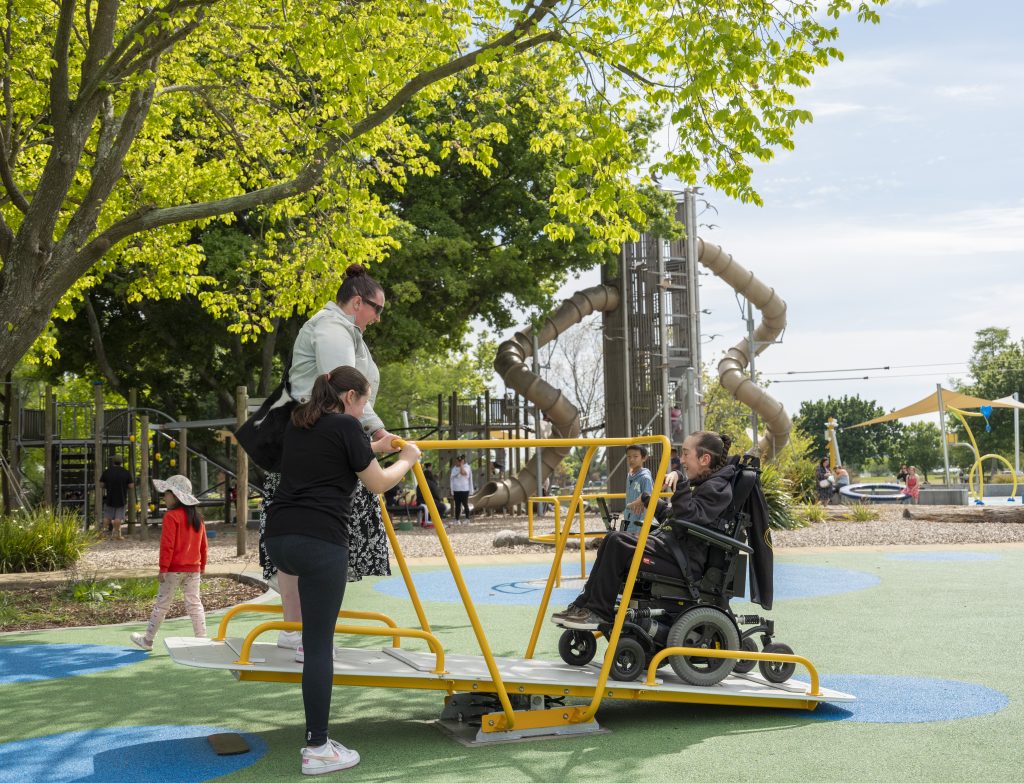
- Easy access and circulation: clear, step-free routes into and through the spaces, so prams, mobility devices and little legs can move easily.
- Side-by-side play: equipment and layouts that let siblings, friends, and carers play together.
- Choice and comfort: a mix of physical, sensory and imaginative play, with shaded seating and quieter pockets.
Built into an integrated movement hub, this might look like accessible loops around the site, multi-user swings and carousels, ground-level challenge, and social areas where everyone can gather. In youth or street settings, it can mean varied challenge levels, and clear sightlines and spots where carers can supervise without hovering, supporting independence as well as safety.
Design essential 2: Nature and climate-smart comfort
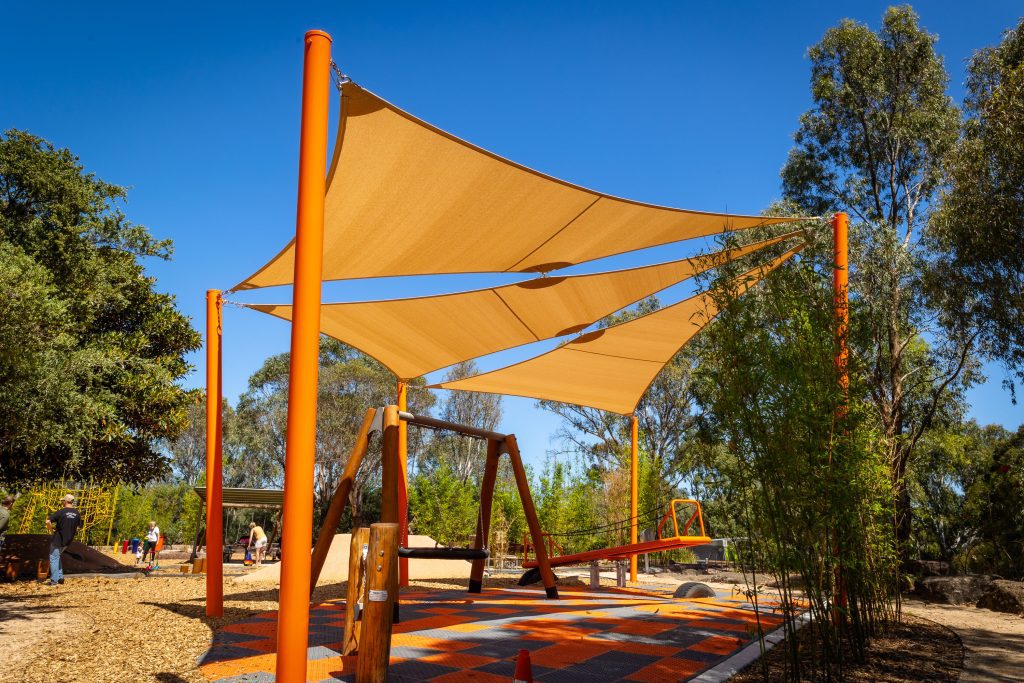
These trends all rely on people wanting to stay – and that’s unlikely if spaces are too hot, or too exposed. Nature-led and climate-responsive design makes playspaces cooler, greener and more inviting, especially as temperatures rise and weather patterns shift.
Effective moves include:
- Including both natural and built shade to cut heat and UV.
- Blending planting, rocks, mounds, logs and water features, and equipment with natural tones and textures, to creative richer, more natural environments for both free and structured play.
- Using climate-appropriate materials to improve comfort and durability.
At the same time, expectations around sustainability, life-cycle performance and circular design are rising – covering embodied carbon, recyclability, maintenance and whole-of-life cost.
Design essential 3: Placemaking, stories and community input
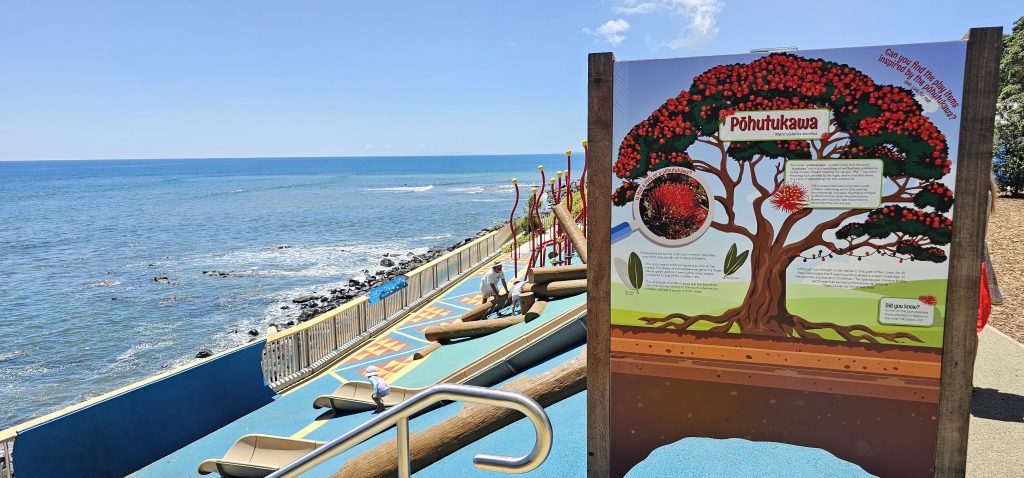
Integrated movement spaces, playful streetscapes and precincts, and youth zones all work best when they feel unmistakably local. Placemaking and community-led design turn a standard playground into a play experience that reflects local people, stories and landscapes – and that locals are proud to use and look after.
Common strategies include:
- Early engagement with children, young people, mana whenua and Traditional Owners and community groups to understand needs, culture and priorities.
- Expressing local stories through colours, themes, forms, graphics and public art that reflect history, culture, ecology or industry.
- Interpretive elements – such as signage, trails and playful markers that educate and engage locals and visitors in the story of the place.
Custom and semi-custom play elements – from distinctive towers to themed panels and surfacing patterns – are increasingly used to express the identity and stories of a place.
Playspace networks: thinking beyond a single playground
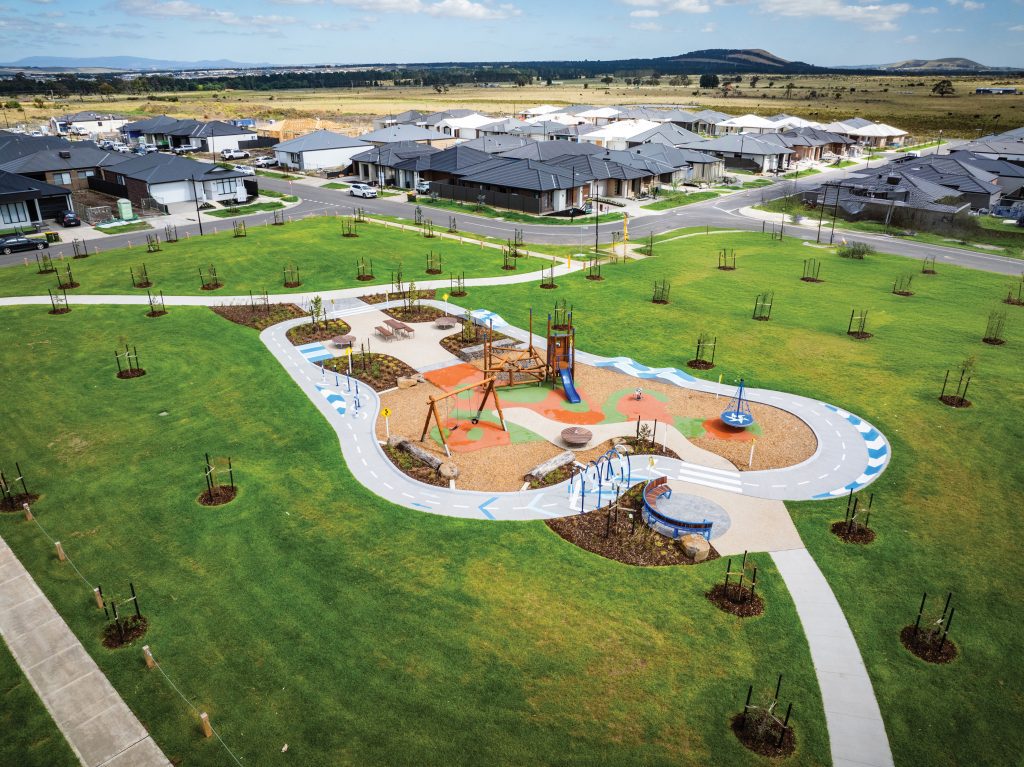
Alongside these design essentials, many councils are planning play at a network level, using demographic analysis and level-of-service frameworks to decide where and how to invest. They increasingly expect suppliers to speak the language of outcomes – improved wellbeing, increased activity, social inclusion, evidence of play value and links to ESG goals.
Suppliers who understand this bigger picture can help match each site’s role in the network – from neighbourhood playgrounds to major district-level destinations – with the right mix of movement, identity and amenity.
Designing playspaces that do more
Together, these trends and design essentials point to a clear direction for 2026: playspaces across New Zealand and Australia that continue to break the mould of the traditional playground – providing even more ways to move, more reasons to stay, and more value for the communities they serve.
Leaders in next generation playground design and equipment, Playground Centre partners with councils, developers and landscape architects to harness the latest trends, with solutions tailor to a site and community.
If you’re planning a new integrated movement space, updating an existing playground, or developing your council’s play strategy, contact us to explore how we can help you create playspaces that truly do more.